
Your Garage Door Springs Are Working Harder Than You Think
If you live in Maricopa, you already know that the desert heat is tough on just about everything — your car, your AC system, your landscaping, and yes, even your garage door. One of the most critical components of your garage door system is the springs, and they take a serious beating in our Arizona climate.
Garage door springs are under constant tension, lifting and lowering a door that can weigh anywhere from 130 to over 400 pounds. When you add triple-digit temperatures to the equation, the metal expands, contracts, and fatigues faster than it would in milder climates. So how long should you expect your garage door springs to last here in Maricopa? And what can you do to get the most out of them?
The Average Lifespan of Garage Door Springs
Most standard garage door springs are rated for approximately 10,000 cycles. One cycle equals one full open-and-close of your garage door. For the average household that opens and closes the door about four times per day, that works out to roughly seven to nine years of use.
However, that estimate is based on moderate conditions. In the Maricopa area, where summer temperatures regularly exceed 110°F and garage interiors can climb even higher, the reality is often different. The intense heat accelerates metal fatigue, which means springs in our area may only last five to seven years — sometimes less if the garage isn't insulated or ventilated.
Torsion Springs vs. Extension Springs
There are two main types of garage door springs, and their lifespans differ slightly:
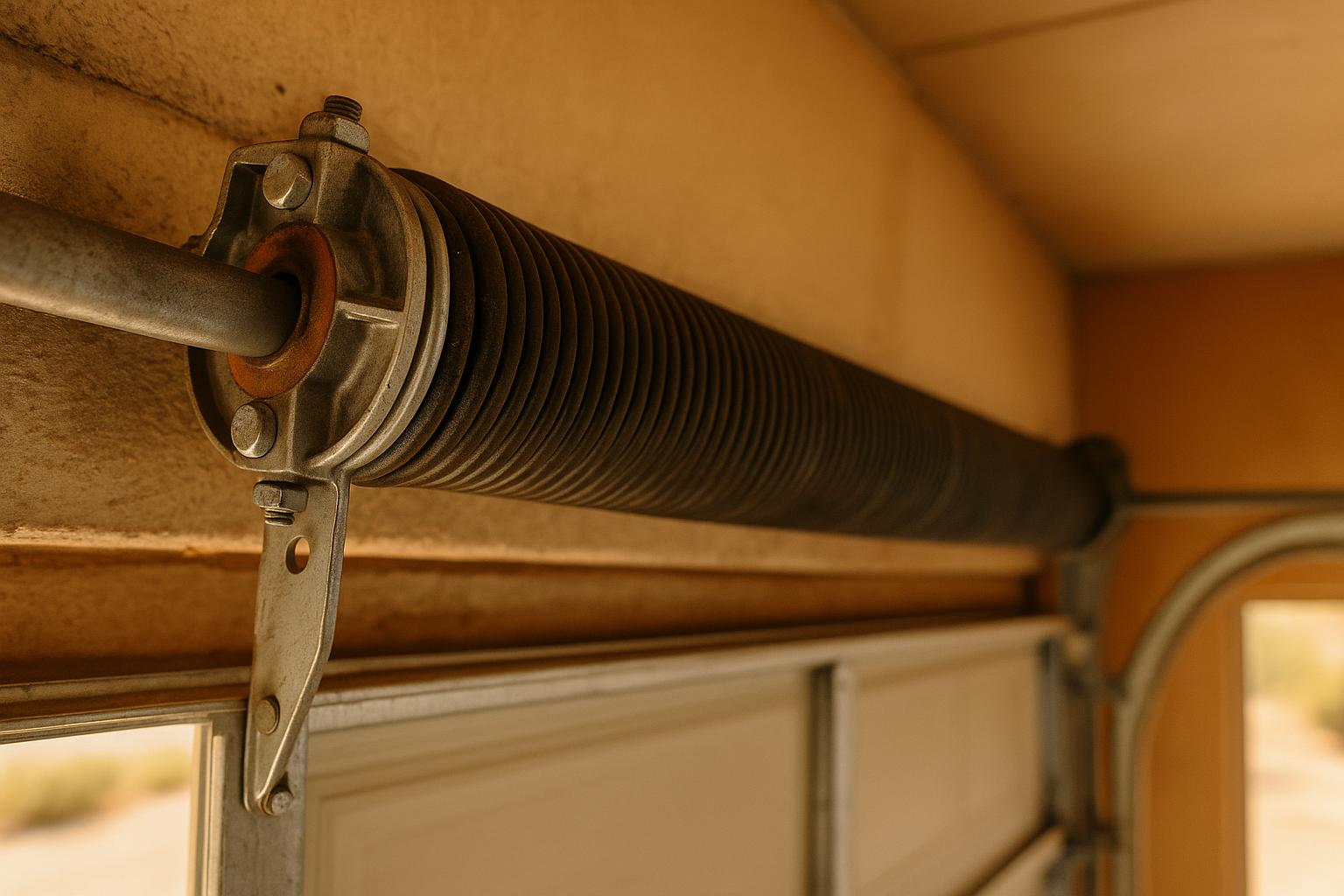
- Torsion springs are mounted above the garage door opening on a metal shaft. They're the more common type in modern installations and tend to last longer because they distribute stress more evenly. A standard torsion spring is rated for about 10,000 cycles, while high-cycle options can last 25,000 to 50,000 cycles.
- Extension springs run along the horizontal tracks on either side of the door. They tend to wear out faster and are more prone to sudden failure. These are often found in older garage door systems.
If your home in Maricopa still has extension springs, it may be worth upgrading to torsion springs for improved durability and safety.
Why Arizona Heat Is So Hard on Springs
Metal expands when it heats up and contracts when it cools down. In a place like Maricopa, where a single day can swing from 75°F in the early morning to 115°F by mid-afternoon, your garage door springs go through significant thermal cycling. Over months and years, this constant expansion and contraction weakens the metal at a molecular level.
Here are the specific ways Arizona's climate affects your springs:
- Accelerated metal fatigue: Repeated thermal cycling causes micro-cracks in the spring coils that grow over time.
- Lubricant breakdown: The grease and lubricant that keeps springs operating smoothly dries out much faster in extreme heat, increasing friction and wear.
- Corrosion from monsoon moisture: While Maricopa is dry most of the year, monsoon season brings sudden humidity spikes that can cause surface rust on unprotected springs.
- Garage heat buildup: An uninsulated garage can reach 130°F or more during summer, creating an oven-like environment for your springs and other hardware.
Warning Signs Your Springs Are Failing
A broken garage door spring is one of the most common repair calls we get from homeowners across Maricopa, Casa Grande, and Queen Creek. But springs rarely fail without warning. Here are the signs to watch for:
- The door feels heavier than usual when you try to lift it manually. This means the springs are losing tension.
- The door opens unevenly or appears crooked. One spring may be weaker than the other.
- You hear loud squeaking or grinding when the door operates. This often indicates dry, worn springs.
- Visible gaps in the spring coils. A torsion spring that has broken will have a visible gap in the middle.
- The opener struggles or stops mid-cycle. When springs can't carry their share of the load, the opener motor has to work harder, which can burn it out prematurely.
If you notice any of these signs, it's important to call a professional rather than attempting a DIY fix. Garage door springs are under extreme tension and can cause serious injury if handled incorrectly.
How to Extend the Life of Your Garage Door Springs
While you can't stop the Arizona heat, there are several practical steps you can take to help your springs last longer:
1. Lubricate Your Springs Regularly
Apply a silicone-based or lithium-based garage door lubricant to your springs every three to four months. In Maricopa's heat, you may want to do this even more frequently during summer. Proper lubrication reduces friction and slows down wear.
2. Schedule Annual Preventive Maintenance
A professional maintenance visit includes spring inspection, lubrication, balance testing, and hardware tightening. Think of it like an annual checkup for your garage door. Catching small issues early can prevent a sudden spring failure that leaves you stuck.
3. Insulate Your Garage
Adding insulation to your garage door and walls can significantly reduce interior temperatures. This means less thermal stress on your springs and other metal components. As a bonus, it can also lower your energy bills if your garage is attached to your home.
4. Consider High-Cycle Springs
If you're replacing springs, ask about high-cycle options rated for 25,000 or even 50,000 cycles. They cost more upfront but can last two to five times longer than standard springs — a smart investment for homeowners who plan to stay in their Maricopa home for years to come.
5. Balance Your Door
An unbalanced garage door puts uneven stress on the springs, causing one side to wear out faster. You can test this by disconnecting the opener and manually lifting the door halfway. If it doesn't stay in place, the springs may need adjustment.
When It's Time to Replace Your Springs
If your garage door springs are more than five years old and you're starting to notice any of the warning signs mentioned above, it's time to have them inspected. In many cases, we recommend replacing both springs at the same time — even if only one has broken. Since both springs are the same age and have endured the same conditions, the second one is likely close behind.
At Maricopa Garage Door Works, we keep a full inventory of torsion and extension springs on our trucks so we can handle most replacements in a single visit. We serve homeowners throughout Maricopa, Chandler, Gilbert, Coolidge, and the surrounding areas with honest pricing and no surprise fees.
Don't Wait for a Broken Spring to Ruin Your Day
A broken garage door spring always seems to happen at the worst possible time — when you're heading to work, picking up the kids, or trying to get out of the heat. The best way to avoid that scenario is to stay ahead of the problem with regular maintenance and timely replacements.
If you're unsure about the condition of your springs or it's been a while since your last inspection, give us a call. We'll take a look, give you an honest assessment, and help you make the best decision for your home and your budget.