
That Loud Garage Door Might Be Trying to Tell You Something
If your garage door has started sounding like a freight train every time you open or close it, you're not alone. Noisy garage doors are one of the most common complaints we hear from homeowners in Maricopa, and for good reason — when your garage is attached to your home, every grind, squeal, and rattle echoes through the house. Early mornings and late nights become especially frustrating when the whole family wakes up to the sound of the door going up.
The good news? Most causes of a loud garage door are fixable, and some you can even address yourself. The key is figuring out what kind of noise you're hearing and where it's coming from. Let's break it down.
Grinding or Scraping Sounds
A grinding noise usually points to metal-on-metal contact somewhere in the system. The most common culprits include:
- Worn-out rollers: Steel rollers are standard on many garage doors, but over time they wear down and begin grinding against the tracks. Nylon rollers are a popular upgrade because they're significantly quieter and don't require as much lubrication.
- Misaligned tracks: If the vertical or horizontal tracks have shifted even slightly, the door can scrape against them as it moves. You might also notice the door hesitating or getting stuck at certain points.
- Dry bearings: The bearings in your rollers, hinges, and pulleys need periodic lubrication. In the dry desert climate around Maricopa and the surrounding areas, lubricant dries out faster than it does in more humid regions.
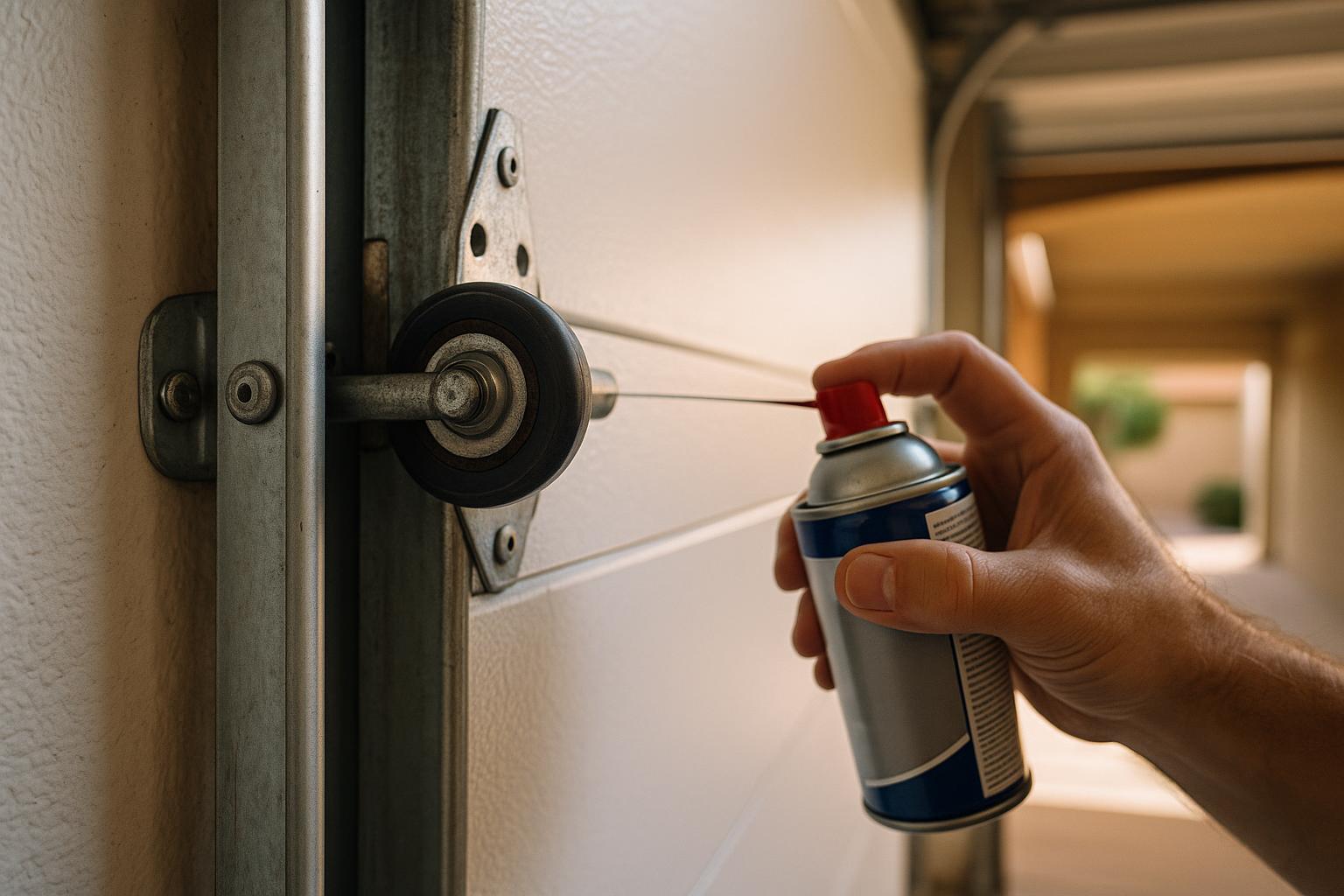
If you hear grinding, start by visually inspecting the rollers and tracks. Look for visible wear, chips in the rollers, or gaps between the rollers and the track. A quick application of a silicone-based garage door lubricant can sometimes make an immediate difference.
Rattling or Vibrating Noises
Rattling is often the easiest problem to diagnose and fix. It typically means something is loose. Common sources include:
- Loose nuts and bolts: The constant motion of a garage door can vibrate hardware loose over time. Check the hinges, brackets, and track mounts and tighten anything that's come undone.
- Loose chain on a chain-drive opener: If you have a chain-drive garage door opener, the chain can develop slack over time. A loose chain slaps against the rail and creates a rattling sound with every cycle.
- Worn-out hinges: Hinges connect the individual panels of your garage door. When the holes in the hinges become elongated from wear, the panels shift slightly and rattle during operation.
Grab a socket wrench and go through the hardware methodically. You'd be surprised how often a simple tightening solves the problem entirely.
Squealing or Squeaking Sounds
High-pitched squealing is almost always a lubrication issue. The moving parts of your garage door system — rollers, hinges, springs, and the opener's rail — all need regular lubrication to operate smoothly.
Here in Maricopa, where summer temperatures regularly exceed 110°F, lubricants break down and evaporate much faster than the manufacturer might expect. We recommend lubricating your garage door's moving parts at least twice a year, and ideally every quarter if you use your garage door multiple times a day.
Important tip: Use a garage door-specific silicone or lithium-based spray lubricant. Avoid WD-40 for long-term lubrication — it's a solvent and degreaser, not a true lubricant. It might quiet things temporarily, but it can actually strip away the grease your components need.
Banging or Popping Sounds
A loud bang or pop when the door starts moving is more concerning. This can indicate:
- Torsion spring issues: The torsion springs above your door are under extreme tension. If they're wearing out or improperly adjusted, they can make popping or banging sounds. Never attempt to adjust or replace torsion springs yourself — this is a job for a trained technician due to the serious injury risk involved.
- Panel or track problems: If a panel is cracked or warped, or if the track has a dent or bend, the door can pop or bang as it passes over the damaged area.
- Opener force settings: Sometimes the opener's force settings are too high, causing the door to slam into the fully open or fully closed position with excessive force.
If you're hearing banging sounds, we strongly recommend having a professional inspect the system. What sounds like a minor annoyance could be a warning sign of a component that's about to fail.
Is Your Garage Door Opener the Problem?
Sometimes the door itself is fine, but the opener is the noise source. There are three main types of garage door openers, and they vary significantly in noise level:
- Chain-drive openers: The most affordable option, but also the loudest. The metal chain creates vibration and noise similar to a bicycle chain. If your opener is a chain-drive and noise is a priority, you might consider upgrading.
- Belt-drive openers: These use a rubber belt instead of a chain and are dramatically quieter. They're a popular choice for homeowners in Maricopa whose bedrooms are near or above the garage.
- Direct-drive openers: The quietest option available. The motor itself moves along the rail, eliminating most vibration. These are ideal if noise reduction is your top concern.
If your current opener is more than 10-15 years old, upgrading to a modern belt-drive or direct-drive model can transform your experience. Newer openers also come with improved safety features, smartphone connectivity, and battery backup — all worthwhile upgrades.
When to Call a Professional
Some noise issues are straightforward DIY fixes — tightening bolts, spraying lubricant, or adjusting the chain tension on your opener. But other problems require professional attention:
- Any issue involving the torsion springs or cables
- Tracks that are visibly bent, dented, or misaligned
- Rollers that are cracked or broken
- Noises that started suddenly after a door strike or impact
- Opener motor that sounds strained or is running but the door won't move
Ignoring persistent noise can lead to bigger, more expensive problems down the road. A roller that's grinding today could seize up tomorrow and pull the track out of alignment, turning a $50 repair into a $500 one.
Keep Your Garage Door Running Quietly
The best way to prevent a noisy garage door is regular preventive maintenance. At Maricopa Garage Door Works, we offer maintenance services that include a full inspection, lubrication of all moving parts, hardware tightening, balance testing, and safety sensor checks. It's the kind of routine care that keeps small issues from becoming big headaches.
If your garage door has been getting louder and you're not sure what's causing it, give us a call. We serve homeowners throughout Maricopa, Casa Grande, Queen Creek, Chandler, Gilbert, and Coolidge with honest pricing and fast response times. We'll diagnose the noise, explain your options, and get your door running smoothly and quietly again.